
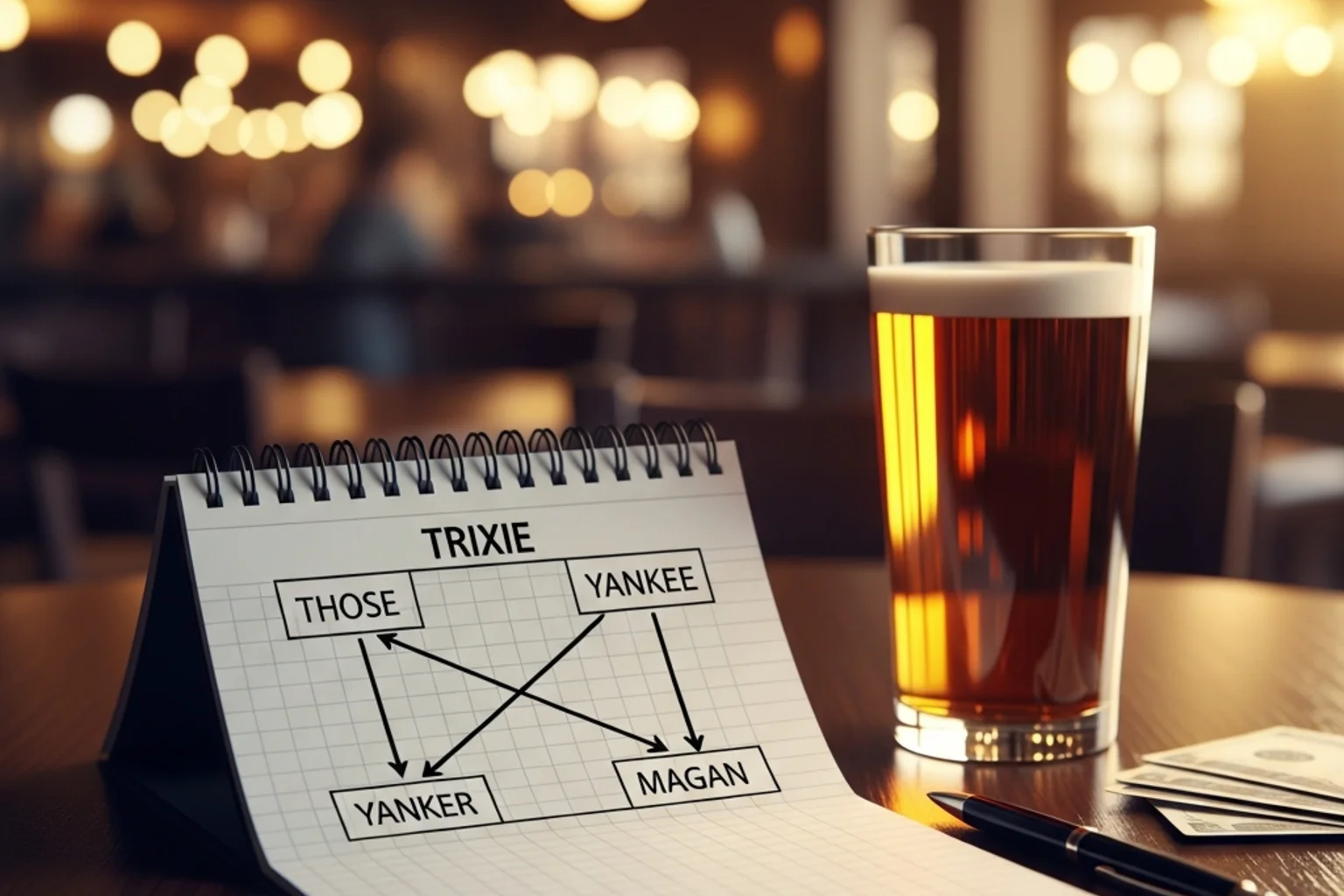
Smarter multiples for smarter punters. Between the straight accumulator (all legs must win) and the Lucky 15 (every combination of four selections), there sit two betting structures that most Cheltenham punters have heard of but few truly understand: the Trixie and the Yankee. Both offer more coverage than an acca and less cost than a Lucky 15 — and at a festival where the favourite win rate sits at 29.2% over 25 years, that middle ground is exactly where many punters should be operating.
The key difference from a straight accumulator is that both the Trixie and the Yankee include multiple sub-bets — doubles and trebles — that pay out even when not every leg wins. You need at least two winners for any return, but when two or three land, the combination structure generates returns that a single failed acca never could.
Trixie Explained — Three Selections, Four Bets
A Trixie consists of four bets on three selections: three doubles and one treble. At £1 per bet, a Trixie costs £4 — significantly more than a straight treble (£1) but dramatically less than the 15 bets of a Lucky 15. The Trixie occupies a specific niche: it suits punters who have three strong opinions and want coverage beyond a single treble without the cost of covering every permutation.
The critical feature of a Trixie is that two winners produce a return. If you have three selections and two win, the Trixie pays out on the double that contains both winners. The treble and the other two doubles lose, but the surviving double generates a return. Whether that return covers the full £4 stake depends on the odds — two winners at 3/1 and 4/1 would produce a double return of £20 from a £1 bet, comfortably covering the total stake. Two winners at even money would return just £4 on the double, barely breaking even.
When all three selections win, the Trixie pays out on all four bets — three doubles and the treble — producing a return that exceeds a straight treble by a meaningful margin. The extra doubles act as bonus returns that reward a clean sweep. At Cheltenham, where the average stake sits around £8.22 per individual bet, a £5 Trixie costs £20 — a reasonable outlay for three strong festival selections that offers genuine downside protection compared with a straight treble where one loser kills the entire bet.
A Patent extends the Trixie by adding three singles — making it seven bets on three selections. This means a single winner generates some return, similar in concept to the Lucky 15’s coverage. The Patent suits punters who want the three-selection structure but with even more safety. The trade-off is the increased cost: £7 per unit instead of £4.
Yankee Explained — Four Selections, Eleven Bets
A Yankee covers four selections with 11 bets: six doubles, four trebles, and one four-fold. At £1 per bet, it costs £11. The Yankee sits between the Trixie (four bets) and the Lucky 15 (fifteen bets) and shares the Lucky 15’s four-selection structure but without the four singles. This means two winners are the minimum for any return — unlike the Lucky 15, a single winner produces nothing.
The Yankee’s strength is its coverage when two or three of your four selections win. With two winners, you collect on one double. With three winners, you collect on three doubles and one treble — a substantial return that can produce strong profits even if the fourth leg loses. Four winners pay out on all 11 bets, generating combined returns that dwarf a straight four-fold because of the compounding effect of multiple doubles and trebles.
Compared with the Lucky 15, the Yankee saves you the cost of four singles — £4 per unit less. The downside is that a single winner returns nothing, whereas the Lucky 15 at least pays out on the winning single. Whether this matters depends on your confidence level. If you rate all four selections at a reasonable chance of winning (say 25% or higher each), the Yankee’s lower cost makes it more capital-efficient. If one of your selections is a speculative outsider that you rate at 10% to win, the Lucky 15’s single on that horse provides a safety net the Yankee does not.
At Cheltenham, the Yankee suits a day where four races offer clear form angles but none of them feels like a certainty. Wednesday’s card, for example, might produce a strong view on the Queen Mother Champion Chase, a well-fancied Ballymore selection, a solid Cross Country bet, and a Coral Cup each-way type. Linking them in a Yankee gives you coverage across multiple combinations without the full cost of a Lucky 15.
When to Use a Trixie, Yankee, or Something Else
The choice between multiple bet structures comes down to two variables: how many strong selections you have and how confident you are in each one.
Three high-confidence picks warrant a Trixie. If you have analysed the card and three races stand out where your assessed probability significantly exceeds the market’s implied probability, the Trixie gives you combination coverage without unnecessary cost. If your confidence is slightly lower, the Patent (adding singles) provides an extra layer of protection for £3 more per unit.
Four medium-confidence picks suit a Yankee. When you have opinions across four races but none feels like a banker, the Yankee’s 11-bet structure ensures that any combination of two or more winners generates a return. If one of those four picks is genuinely speculative — a long shot in a big-field handicap — upgrade to a Lucky 15 so the single on that outsider provides a return even if the others all lose.
A simple decision framework: rate your confidence in each selection as high (you would make it your nap), medium (solid but not certain), or low (value play at a price). Three highs? Trixie. Four mediums? Yankee. Three mediums and one low? Patent. Four with one or more lows? Lucky 15. Two selections only? A straight double — combination bets are not designed for just two picks.
The underlying principle across all these structures is the same: Cheltenham’s competitive fields make clean sweeps difficult. Combination multiples acknowledge that reality by providing returns from partial success. The specific structure you choose should match your conviction level and your tolerance for total loss. Getting that match right is the difference between a bet structure that works for you and one that simply costs more.
One common mistake to avoid: do not use combination bets as a way to disguise undisciplined selection. If you cannot articulate a clear reason for each pick beyond gut feeling, adding more coverage through a Trixie or Yankee does not improve the bet — it just increases the stake on weak selections. Combination multiples work best when every leg has been properly assessed. The structure provides insurance against one or two legs failing; it does not compensate for poor analysis across the board.
Understanding the Full Stake of Combination Bets
Combination bets involve multiple sub-bets, and the total cost can exceed what you initially expect. Always calculate the full stake before confirming — a £2 Yankee is £22, not £2. Set your multiple-bet budget as a separate allocation within your festival bankroll and do not exceed it. If you need support at any point, BeGambleAware is available on 0808 8020 133, free and confidential.