
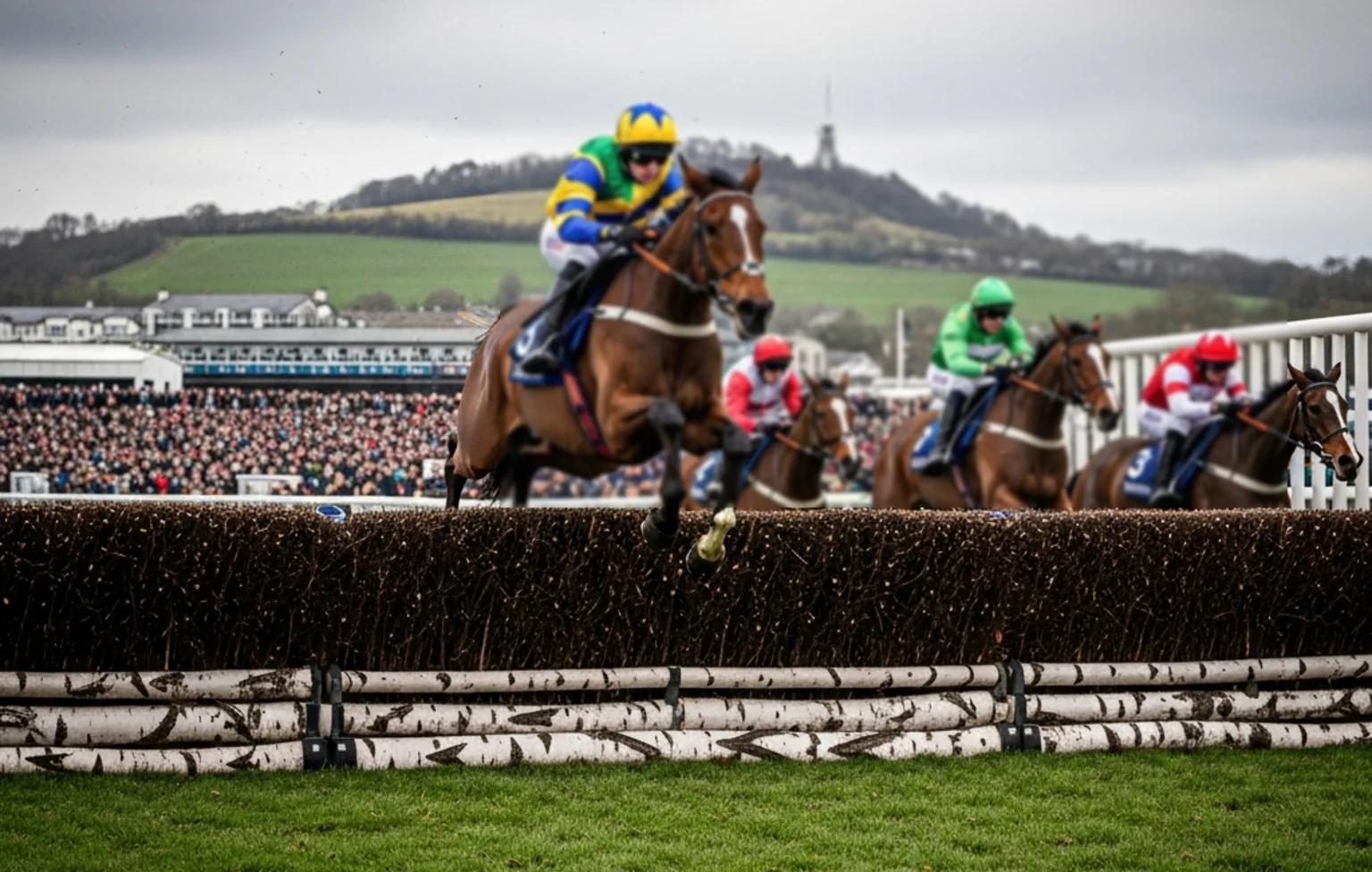
The Cheltenham Gold Cup is the race that defines a career — for horse, trainer, and jockey alike. Three miles, two furlongs and seventy yards over twenty-two fences on a Friday afternoon in March, with 1.8 million ITV viewers watching and a record prize fund of £625,000 on the line. Jump racing’s ultimate test — 3 miles, 22 fences, one Gold Cup.
The 2026 renewal carries extra intrigue. Willie Mullins has entered nine horses, a number that borders on an invasion. The total festival purse has risen to a record £4,975,000, up 5% on 2025, and the Gold Cup’s share reflects the race’s status as the absolute centrepiece. But here is the tension that makes this race fascinating for punters: Gold Cup Day is historically the worst day of the festival for favourites. Five of the last twenty-five festival Fridays have passed without a single favourite winning any race on the card. When the biggest betting event of the jump-racing calendar also happens to be the most volatile, the data demands respect.
The Gold Cup — A Race Like No Other
First run in 1924, the Gold Cup has produced some of jump racing’s most iconic moments. Arkle won three consecutive renewals in the 1960s and remains the standard against which every staying chaser is measured. Best Mate matched that hat-trick between 2002 and 2004. Al Boum Photo won back-to-back editions in 2019 and 2020, the most recent horse to successfully defend the title. Each of these champions shared two qualities: exceptional stamina and an ability to handle Cheltenham’s undulating terrain, particularly the gruelling uphill finish that breaks the resolve of horses who have travelled too keenly through the race.
The trainer dynamic in recent years has been dominated by Mullins and the Irish contingent. Mullins has nine entries for 2026, creating a situation where one trainer could theoretically fill half the field. His strength in depth is unprecedented in Gold Cup history, and it complicates the betting market because stablemates divide the money and make it harder to identify the yard’s primary hope until declarations are final.
On the British side, Nicky Henderson has publicly stated that his 2026 team is the strongest he has taken to the festival in recent years. Henderson’s Gold Cup record is not as prolific as his Champion Hurdle numbers, but the Seven Barrows operation has produced high-class staying chasers capable of challenging Irish-trained rivals. The King George VI Chase at Kempton over Christmas provided a direct clash between British and Irish contenders, and the closeness of that finish suggested the Gold Cup could be one of the most competitive renewals in years.
What the history book tells punters most clearly is this: the Gold Cup rewards proven stamina over raw speed. Horses who have won over three miles or further at Grade 1 level have a significantly better record than improvers stepping up in trip for the first time.
Gold Cup 2026 Contenders
The 2026 Gold Cup market has been shaped by performances across the autumn and winter, with the King George, Savills Chase, and Irish Gold Cup providing the final trial form. Mullins dominates the entries, but the race itself rarely goes to script — and several British-trained contenders have legitimate claims.
From the Mullins battalion, the ante-post favourite has been established through a campaign that combined a comfortable Leopardstown success with strong form in the Irish Gold Cup. The yard’s depth means there will likely be a strong pace set by stablemates, which plays into the hands of the primary contender. Mullins has won the Gold Cup enough times to understand the tactical nuances of the race, and having multiple entries gives him the option to control the tempo. The question is whether the market has fully priced in the yard’s strength or whether the sheer number of entries has confused the picture.
Henderson’s leading contender brings different qualities. A King George performance that took the fight to Irish rivals on Boxing Day demonstrated the class and courage needed for the Gold Cup. Going preferences lean toward better ground, which could be a concern given that the 2026 festival opened on Good to Soft after a wet winter. If the ground dries through the week, this horse’s chance improves materially. Henderson has spoken about the strength of the British challenge in 2026, and a Gold Cup win would be a symbolic as well as sporting triumph.
Beyond the headline names, look for value among the second-tier contenders. Horses at 12/1 to 20/1 who have proven course form, stamina credentials, and a jockey booking that signals intent from connections can outrun their odds in a race where the favourite has historically been unreliable. The Gold Cup rewards horses who stay and jump — two attributes that do not always belong to the most talented animal in the field.
Form Factors That Decide the Gold Cup
Picking the Gold Cup winner is not about finding the best horse in training — it is about finding the horse best suited to this specific test on this specific day. Several form factors separate Gold Cup contenders from Gold Cup winners.
Stamina is the primary filter. The Gold Cup’s three miles and two furlongs, combined with Cheltenham’s uphill finish, demands a horse who genuinely stays the trip rather than one who merely gets it on a flat track. Previous winning form over three miles at Grade 1 level is the strongest positive indicator in the race’s recent history. Horses stepping up from shorter trips — even proven performers at two and a half miles — face an additional question mark that the market frequently underprices.
Course form ranks alongside stamina. Seven-year-olds who have previously won at the Cheltenham Festival hold a 28% strike rate when returning to the course since 2013. That number — drawn from OLBG’s course statistics — is dramatically higher than the baseline for any age group without Cheltenham experience. It reflects a simple truth: some horses handle this track and some do not, and previous performance here is the most reliable predictor of future performance.
Going conditions add the third variable. The 2026 festival opened on Good to Soft, with barrier positions adjusted on both the Old and New Course due to a wet winter. For Gold Cup contenders, soft ground transforms the race from a test of class into a test of endurance. Horses with proven soft-ground form gain a genuine advantage, while those whose best performances came on better ground face a legitimate question about whether they can sustain their effort through demanding conditions over the full distance.
Finally, consider the November Meeting correlation — or lack of it. Only two Gold Cup winners in the last ten years also won at Cheltenham’s November Meeting in the same season. The November-to-March leap is longer than it appears on the calendar; horses peak at different times, and the ground conditions in November rarely resemble March. Use November form as a data point rather than a prediction. The Dublin Racing Festival in early February has proven a far more reliable Gold Cup trial in recent years.
Managing the Gold Cup Excitement
The Gold Cup generates more betting excitement than any other race on the National Hunt calendar — and that excitement can lead to oversized stakes. Decide your Gold Cup budget before race day and do not adjust it based on how the earlier races went. A losing Friday afternoon does not require a bigger bet on the last race. If you feel pressure to increase your stakes or chase losses, that is a signal to stop. Free, confidential help is available at BeGambleAware or on 0808 8020 133.