
 Available in US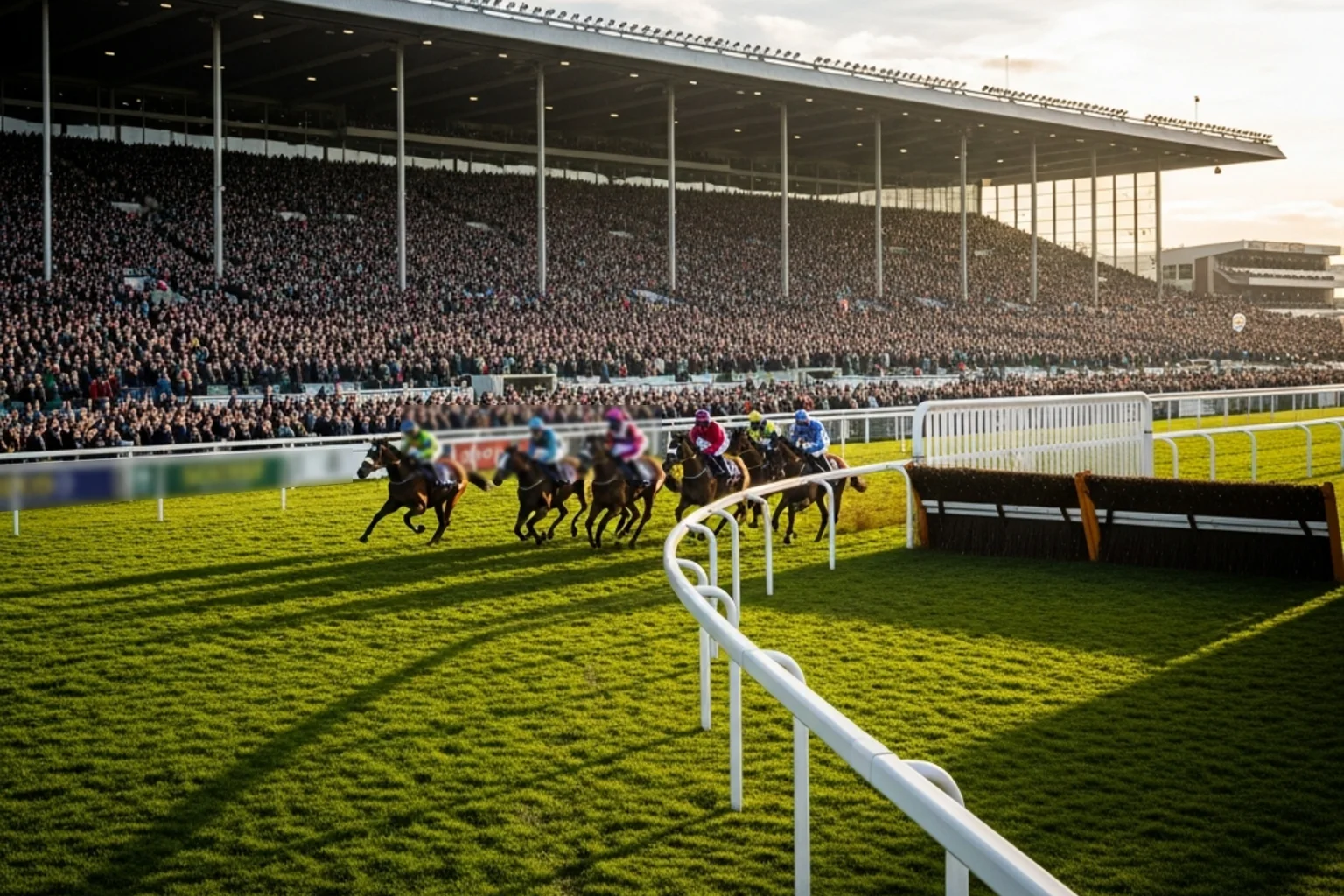
The festival’s final act — and the hardest day to call. Gold Cup Day draws the largest television audience of the week — 1.8 million ITV viewers tuned in to the 2025 renewal, up 200,000 on the previous year — and generates more betting turnover than any single day in the jump-racing calendar. Yet Friday is also, statistically, the worst day of the festival for favourites. Five of the last 25 festival Fridays have produced zero favourite winners across the entire seven-race card. That is not a quirk — it reflects the nature of Day 4’s programme.
The 2026 Gold Cup Day was a case study in both extremes. On one hand, the feature race delivered a performance for the ages: Gaelic Warrior powered away to win by eight lengths at 11/4 joint-favourite, giving Willie Mullins a record-equalling fifth Gold Cup and Paul Townend his fifth as well — making him the most successful jockey in the race’s history. On the other hand, the rest of the card was a graveyard for market leaders. Apolon De Charnie sprang a 50/1 shock in the Triumph Hurdle — the second year running that the juvenile championship had been won at a massive price, following Poniros at 100/1 in 2025. Johnny’s Jury landed the Albert Bartlett at 20/1, continuing that race’s extraordinary record of never producing a winning favourite in the last 12 runnings. Only Dinoblue at 11/8 in the Mares’ Chase justified favouritism all afternoon. It was, by widespread consensus, a day for the bookmakers — and a day that taught punters everything they need to know about the volatility of Friday’s card.
The day was also tinged with sadness. Envoi Allen, the three-time Festival winner and one of the most popular chasers of his generation, collapsed and died after the Gold Cup — a devastating end to what was meant to be his farewell run before retirement. The 12-year-old, trained by Henry de Bromhead, was given a rousing reception by the Prestbury Park faithful as he entered the parade ring for the final time. His death cast a shadow over an afternoon that had otherwise belonged to Gaelic Warrior.
For punters who have survived the first three days with their bankroll intact, Friday demands a specific approach: respect the volatility, size your bets accordingly, and resist the temptation to go all-in on the final afternoon. The 2027 Cheltenham Festival runs from Tuesday 16 to Friday 19 March, with Gold Cup Day scheduled for Friday 19 March. Here is the full card, race by race, with the angles that matter and a look at what 2026 taught us.
The race everything builds to is the Gold Cup.
Triumph Hurdle & County Hurdle
The Triumph Hurdle opens Friday’s card — a Grade 1 juvenile hurdle over two miles and one furlong that brings together the best four-year-old hurdlers from Britain and Ireland. The race has a volatile character; juvenile form is inherently less reliable than form from older horses, and the Triumph regularly produces surprises.
The 2026 renewal was a sensation. Apolon De Charnie, trained by Willie Mullins and ridden by his son Patrick, delivered a 50/1 shock — drawing level with Nicky Henderson’s record of seven Triumph Hurdle wins and making it five consecutive Triumph victories for the Mullins yard. The four-year-old powered up the hill to defeat Maestro Conti (5/1) and Minella Study (7/1), with the well-backed 7/2 favourite Proactif only ninth. It was the second year in a row that the Triumph had been won at a massive price — Poniros scored at 100/1 in 2025 — and the result reinforced the race’s reputation as one where the market’s judgement is unreliable. Mullins joked: “Only 50/1 this year and not 100/1 — I’m so disappointed!”
The key trends for the Triumph are: 9 of the last 10 winners ran between 18 and 55 days before the race; 8 of the last 10 had won at least 50% of their hurdle starts; 7 of the last 10 had run no more than three times over hurdles. French-bred runners with limited but impressive form have been a recurring source of winners — Apolon De Charnie himself was second in a newcomers hurdle at Auteuil before joining Mullins. The race suits horses with natural hurdling ability rather than those who have been drilled into competence.
For 2027, the Triumph Hurdle market has not yet formed. The juvenile hurdling division does not begin in earnest until the autumn, and the horses that will contest this race are either still on the Flat or have yet to make their hurdling debuts. The approach, as ever with the Triumph, is to monitor the early-season juvenile form closely — particularly the Grade 2 trials at Cheltenham and Fairyhouse — and to be prepared for the market to get it wrong again. If the last two years have taught anything, it is that the Triumph is a race where each-way plays at big prices are not just sensible — they are the only logical approach.
The County Hurdle is Friday’s equivalent of Wednesday’s BetMGM Cup — a big-field handicap hurdle that eats favourites for breakfast. With 20 or more runners typical, four each-way places, and a history of shock results, this is a race for each-way specialists.
The 2026 running was a notable result for the British contingent. Wilful, trained by Jonjo and AJ O’Neill and ridden by Jonjo O’Neill Jr, scored at 14/1 — with the first five home all trained in Britain, a rare turnaround in a race that has been dominated by Irish raiders in recent seasons. Sticktotheplan (25/1), Joyeuse (12/1), Cracking Rhapsody (50/1) and Sinnatra (9/2) filled the places. The 9/2 favourite Sinnatura could only finish fifth. The victory was especially poignant for Jonjo O’Neill Sr, arriving on the 40th anniversary of his unforgettable Gold Cup triumph aboard Dawn Run. He said: “Cheltenham is Cheltenham and to have runners here is fantastic, but to have two winners this year is great.”
For 2027, the County Hurdle market will not take shape until the autumn, when early-season handicap hurdle form provides the raw material for analysis. The Irish handicap surge applies here with particular force; horses from smaller Irish yards arriving with seemingly ordinary form have an exceptional record in this race. The key is identifying horses near the bottom of the handicap whose recent form suggests they are better than their mark indicates. Trainer intent matters — look for horses whose connections have deliberately targeted this race with a light campaign designed to keep the handicap mark low.
Albert Bartlett & Gold Cup
The Albert Bartlett Novices’ Hurdle is the staying novice hurdle championship — three miles for novice hurdlers, and a race that identifies future staying stars. The form here is less exposed than in some other novice races, partly because not every horse has been tested over this distance before the festival.
The 2026 renewal was another Albert Bartlett classic. Johnny’s Jury, trained by Jamie Snowden and ridden by Gavin Sheehan, sprang a 20/1 surprise — powering through from the rear to defeat Fruit De Mer (28/1) and The Passing Wife (11/1) by a length and a half. The grey, a half-brother to Appreciate It, had been transferred from Nicky Henderson’s yard to Snowden’s and had won only low-grade hurdles at Exeter and Carlisle before his Grade 1 breakthrough. Snowden said: “It’s a massive step up from two miles one to three miles, but he’s a half-brother to Appreciate It so we thought his stamina was not in question.” The 9/4 favourite Doctor Steinberg set out to make the running but paid for those early exertions, weakening before the finish.
The result reinforced the Albert Bartlett’s extraordinary statistical profile: 0 of the last 12 winners were favourites, 10 of the last 12 winners were priced 11/1 or bigger, and 8 of the last 12 were trained in Ireland. Johnny’s Jury was one of only four British-trained winners in that 12-year span. The race favours horses who travel through the race rather than those who lead from the front — the hill at Cheltenham finds out front-runners at three miles, particularly on ground that has been raced on for three days.
For 2027, the Albert Bartlett market will not form until the staying novice hurdle division takes shape through the autumn and winter. Horses with stamina in their pedigree and who have won over two and a half miles or more with something in hand tend to be the profile that succeeds. The trend data is emphatic: do not back the favourite, look for horses at 11/1 or bigger, and prefer Irish-trained runners. If there is one race on the entire Friday card where the market’s judgement is demonstrably unreliable, it is the Albert Bartlett.
The Gold Cup needs no introduction — it is the race that defines the festival and the one the entire week builds toward.
The 2026 renewal was a coronation. Gaelic Warrior, trained by Willie Mullins and ridden by Paul Townend, turned what had looked like a wide-open race on paper into a procession. The eight-year-old, sent off at 11/4 joint-favourite alongside Nicky Henderson’s Jango Baie, travelled ominously well throughout, hit the front turning for home, and pulled clear to win by eight lengths. Jango Baie battled on for second, four lengths clear of the defending champion Inothewayurthinkin in third. Grey Dawning was fourth. The victory gave Mullins a record-equalling fifth Gold Cup — drawing level with Arkle’s trainer Tom Dreaper — and made Townend the first jockey to ride five Gold Cup winners. Owner Rich Ricci, winning his first Gold Cup after 21 years of trying, revealed he began crying after the second-last fence. “I’ve been trying to win this race for 21 years,” he said. “It’s brilliant, magic.”
Mullins was full of praise for his jockey: “He’s such a cool jockey and a superb horse, it was a hell of a performance. The way he did it was spectacular, very dominant. He can be keen, but Paul got everything right and the horse put in a tremendous round of jumping.” The victory also completed a remarkable treble for the Mullins-Townend partnership, who had already won the Champion Hurdle with Lossiemouth on Tuesday and the Champion Chase with Il Etait Temps on Wednesday — making the Riccis the first owners to win the Champion Hurdle and Gold Cup in the same season.
For 2027, the Gold Cup market is already taking shape, and the early picture is dominated by the question of whether Gaelic Warrior can defend his crown.
| Horse | Odds | Trainer | Key Form |
|---|---|---|---|
| Gaelic Warrior | 2/1 – 4/1 | Willie Mullins | Defending champion; 8-length winner in 2026 |
| Jango Baie | 7/1 – 10/1 | Nicky Henderson | 2026 Gold Cup second; 2025 Arkle winner |
| Kitzbuhel | 14/1 – 20/1 | Willie Mullins | 2026 Brown Advisory winner; Kauto Star winner |
| Final Demand | 16/1 | Willie Mullins | 2026 Brown Advisory second; progressive |
| Fact To File | 18/1 | Willie Mullins | 2026 Irish Gold Cup winner; non-runner in Ryanair |
| Lulamba | 20/1 | Nicky Henderson | 2026 Arkle second; built for staying trips |
| Inothewayurthinkin | 20/1 | Gavin Cromwell | 2025 Gold Cup winner; third in 2026 |
| The Jukebox Man | 25/1 | Ben Pauling | 2026 King George winner; owned by Harry Redknapp |
Gaelic Warrior is the early favourite at 2/1 to 4/1, and the case for him is straightforward: he was the most dominant Gold Cup winner since Galopin Des Champs in 2024, his jumping was faultless, and he won with plenty in hand. The cautionary note is that Gold Cup winners do not always come back. Inothewayurthinkin won the 2025 Gold Cup and could only manage third in 2026. Galopin Des Champs won back-to-back in 2023 and 2024 but was subsequently retired. The race takes a physical toll that should not be underestimated, and Gaelic Warrior will be nine years old in March 2027 — the age at which many chasers begin to feel the effects of a long career.
Kitzbuhel at 20/1 is the value play identified by Racing TV’s Nic Doggett. The six-year-old won the Kauto Star Novices’ Chase at Kempton on Boxing Day and then made all to win the Brown Advisory at the 2026 festival, defeating stablemate Final Demand by three-quarters of a length. His jumping is a major weapon — he gained almost nine lengths in the air according to RaceiQ data — and he is open to further improvement. If he performs well in the King George at Kempton on Boxing Day, his Gold Cup odds are likely to shorten dramatically. The 20/1 available now could look enormous by February.
Jango Baie at 7/1 to 10/1 is the leading British hope. Nicky Henderson’s charge was a gallant second in 2026, beaten eight lengths but clear of the rest, and he is the kind of horse who could improve with another year of seasoning. Henderson described his 2026 team as the strongest in recent years, and the Gold Cup remains the one race that has eluded the master of Seven Barrows.
The Jukebox Man at 25/1 is the sentimental fancy. Owned by Harry Redknapp and trained by Ben Pauling, the horse won the King George VI Chase at Kempton in 2025 — beating Gaelic Warrior — but faded in the 2026 Gold Cup after a mistake at a critical fence. At 25/1, he represents each-way value for punters who believe that experience and a clear round can bridge the gap to Gaelic Warrior.
The race’s form factors are well-established: proven stamina over three miles at the highest level, Cheltenham course form, the ability to handle whatever ground Friday presents, and a jockey who knows how to ride the hill. At this stage of the week, the going will have changed from its opening assessment — check the morning update and cross-reference each contender’s going record before finalising your selection. The favourite may well be the best horse in the field, but Friday’s history suggests the best horse does not always win the Gold Cup.
The wider context is set out in our Cheltenham betting tips.
Mares’ Chase & Martin Pipe
The Mrs Paddy Power Mares’ Chase is a relatively recent addition to the festival programme but has quickly established itself as a competitive Grade 2 event. Restricted to female chasers, it attracts a smaller field than the open handicaps but still delivers quality racing.
In 2026, Dinoblue made history by becoming the first horse to win the Mares’ Chase in consecutive years. Sent off at 11/8 favourite for Willie Mullins and ridden by Mark Walsh, she travelled beautifully throughout, swatted away the attentions of Panic Attack coming down the hill, and comfortably held Only By Night (11/1) at bay to score by a length and three-quarters. The victory was Mullins’s second of the afternoon — following Apolon De Charnie’s Triumph Hurdle win — and demonstrated the extraordinary depth of the Closutton mares’ division.
For 2027, the Mares’ Chase market has not yet formed. Dinoblue could bid for an unprecedented three-peat — a feat that would cement her status as one of the outstanding mares of the modern era — though Mullins may decide to move her up in trip or redirect her to a different target. The race is run over two miles and four furlongs on the New Course, where the ground tends to be softer than the Old Course by Friday — a factor that can catch out mares who prefer better conditions. Course form and going record are the two primary filters for this race. Watch for the Mullins entries as the season progresses — his primary mares’ chase contender often goes off at a short price and justifies it more often than not.
The Martin Pipe Conditional Jockeys’ Handicap Hurdle is the final competitive betting heat of the festival — a handicap hurdle for conditional jockeys over two miles and four furlongs. Field sizes are large, four each-way places are standard, and the race has a long history of producing big-priced winners.
In 2026, Air Of Entitlement provided a poignant finale to the festival. Trained by Henry de Bromhead — whose stable had been rocked earlier in the afternoon by the loss of Envoi Allen after the Gold Cup — the mare powered to victory at 10/1 under Patrick O’Brien, pulling decisively clear of Hot Fuss (25/1) and Jump Allen (8/1) to score by two and three-quarter lengths. It was her second consecutive Festival win, following her success in the 2026 Ryanair Mares’ Novices’ Hurdle, and it provided a moment of uplift for the de Bromhead yard on an otherwise deeply emotional day.
The Martin Pipe has become a firm favourite among each-way punters precisely because the form is difficult to separate and the favourite rarely obliges. Irish-trained runners have an outstanding record: 9 of the last 12 winners were Irish-trained, and big-name trainers — Mullins (four wins), Elliott (four), O’Brien — have dominated. The conditional jockey element adds unpredictability; less experienced riders can make tactical errors that change the race’s outcome. Horses aged five or six have won every running in the race’s 18-year history apart from two seven-year-olds.
For 2027, the Martin Pipe market will not form until the autumn. Air Of Entitlement may step up in grade after her second Festival win, but if she returns to handicap company, she will be a fascinating contender — rated only 5 lb lower than Wodhooh, who won the Mares’ Hurdle in 2026. If you have one each-way bet left in your festival budget, the Martin Pipe is arguably the best race on the entire card to use it.
Closing Race & Festival Wrap
The Princess Royal Challenge Cup Open Hunters’ Chase — the festival’s closing race — carries sentimental weight more than betting significance. In 2026, Barton Snow scored at 9/2, beating It’s On The Line (7/2F) and Music Drive (33/1). By this point, most punters have already decided whether their festival was a success or a lesson. The closing race tends to attract tired horses at the end of a long week and a crowd whose attention has peaked with the Gold Cup. If you do bet, keep stakes minimal and treat it as a fun sign-off rather than a serious play.
Across the full Friday card, the strategic message is clear and was reinforced with brutal clarity by 2026: discipline matters more on Day 4 than any other day. The Gold Cup will tempt you into oversized stakes because it feels like the climax demands a big bet. Resist that framing. The County Hurdle and Martin Pipe will tempt you with big-field chaos and the prospect of a festival-closing windfall. Play them each-way at sensible stakes. The Triumph and Albert Bartlett offer Grade 1 analysis opportunities where form can help you find value — but both races have a habit of producing results that confound the market. And if the festival has gone badly, Friday is not the day to chase it all back.
The 2026 Gold Cup Day was a microcosm of the entire festival: Mullins won three of seven races (Triumph, Mares’ Chase, Gold Cup), the Prestbury Cup went to Ireland by the narrowest of margins — 15-13 — and the handicaps produced a string of double-figure winners that would have devastated anyone trying to back favourites. The punters who left Cheltenham in the best shape were the ones who treated Day 4 with the same discipline as Day 1 — flat stakes, clear analysis, and the willingness to walk away.
Staying Level-Headed on the Final Day
Gold Cup Day is the most emotionally charged day of the festival, and emotional betting is rarely good betting. Whether you are up, down, or level after three days, your Friday budget should be the amount you set before the festival — not a number adjusted by the week’s results. The 2026 festival was a classic example: Gaelic Warrior’s dominant Gold Cup win was a highlight for those who backed him, but the shocks that preceded it — Apolon De Charnie at 50/1, Johnny’s Jury at 20/1 — would have destroyed anyone who arrived on Friday determined to back the market leaders. The final afternoon is where the most impulsive decisions happen. Keep your head, stick to your plan, and remember that no single bet is worth more than your wellbeing. If you need support, BeGambleAware is available on 0808 8020 133, free and confidential.
