
 Available in US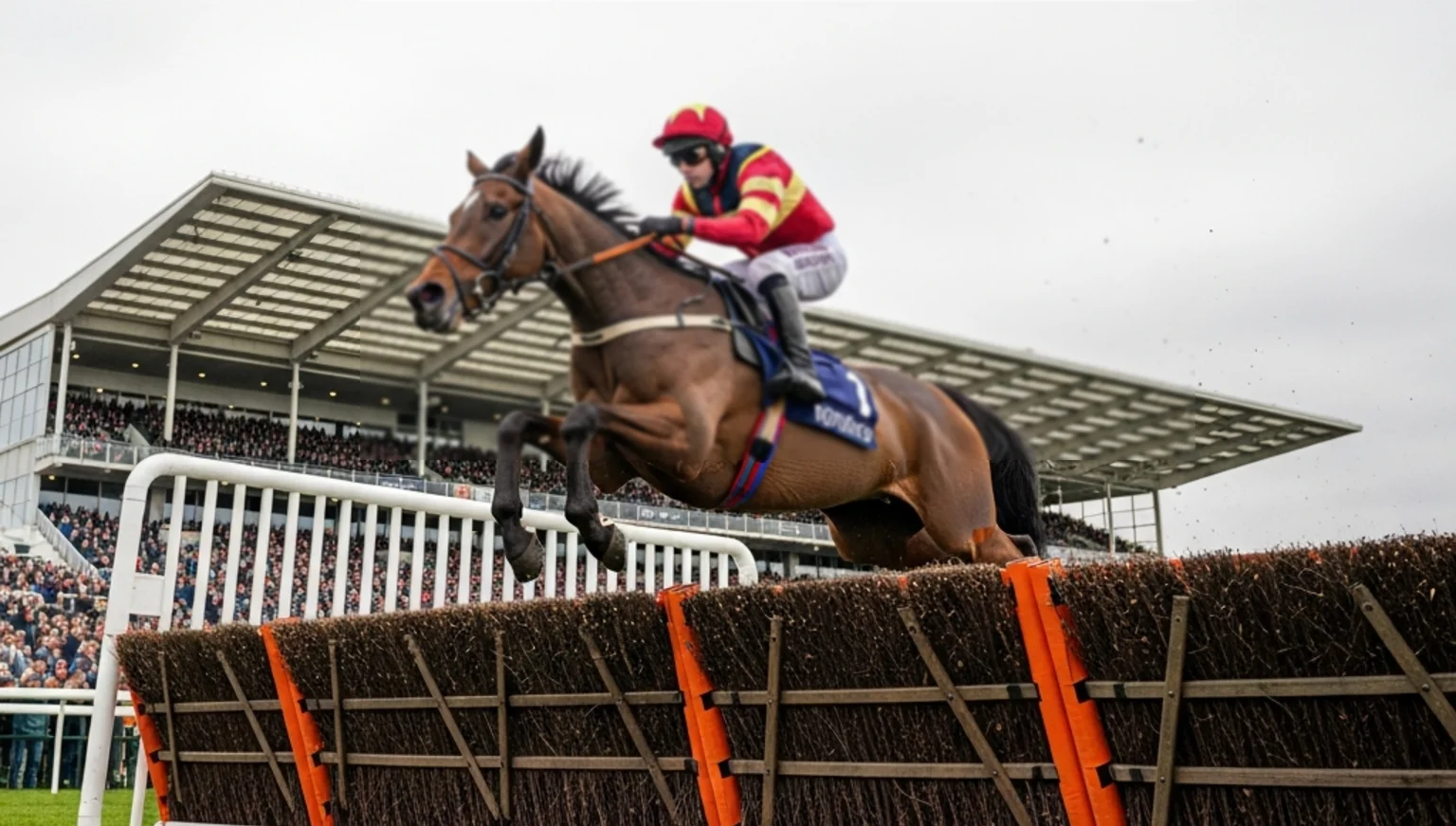
The Champion Hurdle does not just open Cheltenham Festival — it detonates it. At 4:00 on Tuesday afternoon, the first roar of the week erupts from the stands as the field jumps off over two miles of Grade 1 hurdling. It is the race that sets the emotional temperature for the entire festival, and the one that punters have been dissecting since the previous March.
For bettors, the Champion Hurdle carries a statistical tailwind. Champion Day is the best day of the festival for favourites, with a 37% win rate since 2000 — comfortably above the 29.2% average across all four days. The race itself carries a prize of £450,000, making it the second most valuable contest of the week behind the Gold Cup. The 2026 renewal confirmed everything that makes this race special: a dominant favourite, a record-setting performance, and a story line that will shape the 2027 market for months to come. The 2027 Champion Hurdle is scheduled for Tuesday 16 March at 4:00pm. Here is what the form says about who will be at the front when the noise reaches its peak.
The rest of the opening card is in the Day 1 tips.
Champion Hurdle — Race Profile
The Champion Hurdle is run over two miles and one furlong on the Old Course, featuring eight flights of hurdles. It is a Grade 1 contest restricted to horses aged four and older, though in practice it is dominated by five- to eight-year-olds at the peak of their hurdling careers. The emphasis is on speed, tactical awareness, and jumping fluency — unlike the stamina tests later in the week, the Champion Hurdle can be won from the front or from off the pace, and the tactical shape of the race often determines the outcome as much as raw ability.
The Mullins-Henderson rivalry runs deep in this race. Willie Mullins has now won the Champion Hurdle six times — Hurricane Fly (2011, 2013), Faugheen (2015), Annie Power (2016), State Man (2024), and Lossiemouth (2026) — making him the most successful current trainer in the race. Nicky Henderson holds the all-time record with nine Champion Hurdle wins, but his last victory came with Buveur D’Air in 2018, and the Seven Barrows operation has endured a frustrating run in the race since. The 2026 festival underlined the gap: Henderson’s sole contender, Golden Ace, finished fifth as the defending champion, while Mullins saddled three of the nine runners and won with his stable jockey’s pick.
One distinctive feature of the Champion Hurdle is its relatively small field size compared to the handicaps. Typically between eight and twelve runners go to post, which narrows the each-way value but makes the form analysis more straightforward. In a 10-runner race with three places, you are dealing with predictable dynamics: the class horses tend to assert themselves, and the strike rate of well-fancied contenders is higher than in any open handicap. This is a race where form students can genuinely narrow the field to three or four realistic contenders.
Going conditions matter here too. The Old Course, where the Champion Hurdle is run, drains better than the New Course, but the 2026 festival opened on Good to Soft after a wetter-than-average winter. For two-mile hurdlers, ground conditions influence the race pace significantly — softer ground slows the early tempo and turns the final flight and the run up the hill into a genuine stamina test that some pure speedsters cannot handle. Lossiemouth, who relished the ground, was the beneficiary.
The 2026 Champion Hurdle — How It Was Won
The 2026 Champion Hurdle was supposed to be a wide-open affair. It was anything but. Lossiemouth, trained by Willie Mullins and ridden by Paul Townend, delivered a performance of such dominance that it rendered the absence of Constitution Hill, Sir Gino, and State Man — all sidelined for different reasons — almost irrelevant. Sent off at 7/5 favourite, the grey mare tracked the pace-setting Brighterdaysahead through the early stages, moved decisively to the front turning for home, and powered clear up the hill to win by six and a half lengths. It was her fourth consecutive Cheltenham Festival victory — a sequence that began with the Triumph Hurdle in 2023, continued with back-to-back Mares’ Hurdles in 2024 and 2025, and culminated in the race that Mullins called “the one that outranks everything else she’s done.”
The victory was not without its subplot. Mullins had faced a dilemma throughout the winter: whether to send Lossiemouth back to the Mares’ Hurdle — a race she had won twice — or finally let her take her chance in the Champion Hurdle against the boys. The decision was made late, and the key was a pair of cheekpieces fitted for the first time. “She has that mare’s pedigree which gives her that bit of speed and the cheekpieces, I think, just made a huge difference,” Mullins explained. “It made her concentrate that bit more. As horses get older they probably, like the rest of us, start looking for ways out of doing hard work, and this really invigorated her.”
Owner Rich Ricci, winning his first Champion Hurdle after years of trying, was overcome with emotion. “She loves this place, long may it last. The reception she got was great, it is great for the sport. I’d love to win the Gold Cup, hopefully we can do the double on Friday.” He did — Gaelic Warrior won the Gold Cup four days later, making Ricci the first owner to win the Champion Hurdle and Gold Cup in the same season.
The race behind Lossiemouth was competitive. Brighterdaysahead (7/2), trained by Gordon Elliott and ridden by Jack Kennedy, had beaten Lossiemouth at the Dublin Racing Festival a month earlier, but could not match the mare’s turn of foot on this ground and finished second, six and a half lengths adrift. The New Lion (3/1), Dan Skelton’s 2025 Turners winner, stayed on for third but lacked the winner’s speed. Alexei (18/1) ran a stormer in fourth, and defending champion Golden Ace (12/1) was a gallant fifth.
The 2026 race was also notable for its absentees — and one tragic loss that occurred after the festival. Sir Gino, Nicky Henderson’s ante-post favourite, had fractured his pelvis at Cheltenham’s Trials Day in January and was euthanised in March after complications from deep-seated infections. He was six years old and unbeaten in seven starts. Constitution Hill, the 2023 champion, had been switched to Flat racing after three falls in four starts over hurdles and is now being aimed at Pattern races on the level. State Man, the 2024 winner, was ruled out at the start of the season. Their absence diluted the race’s strength in depth but did not diminish Lossiemouth’s performance, which stood on its own merits as one of the great Champion Hurdle displays.
Champion Hurdle 2027 Contenders
The 2027 Champion Hurdle market is shaped by one overriding question: does Lossiemouth return to defend her crown, or does she revert to the Mares’ Hurdle, as she did in 2024 and 2025? Mullins’s decision will define the race. If she runs, she is the clear favourite and the one to beat. If she does not, the Champion Hurdle opens up dramatically and the market reshuffles overnight.
| Horse | Odds | Trainer | Key Form |
|---|---|---|---|
| Lossiemouth | 3/1 | Willie Mullins | 2026 Champion Hurdle winner (6½L); 4-time Festival winner |
| King Rasko Grey | 8/1 | Willie Mullins | 2026 Turners winner; Mullins: “could be a Champion Hurdle type” |
| Old Park Star | 10/1 | Nicky Henderson | 2026 Supreme winner; Arkle more likely target |
| Kabral Du Mathan | 16/1 | Willie Mullins | 2026 Stayers’ Hurdle contender; could drop back in trip |
| The New Lion | 16/1 | Dan Skelton | 2026 Champion Hurdle 3rd; may step up to Stayers’ |
| Alexei | 20/1 | Nicky Henderson | 2026 Champion Hurdle 4th; progressive |
| State Man | 20/1 | Willie Mullins | 2024 Champion Hurdle winner; missed 2026 season |
| Apolon De Charnie | 20/1 | Willie Mullins | 2026 Triumph Hurdle winner at 50/1 |
| Brighterdaysahead | 20/1 | Gordon Elliott | 2026 Champion Hurdle 2nd; beat Lossiemouth at DRF |
Lossiemouth at 3/1 is the favourite, and the case for her is built on performances that defy historical precedent. She is already the first horse since Dawn Run to win four consecutive Festival races across different championship contests. If she returns to the Champion Hurdle, she will be attempting to become the first mare since Dawn Run in 1984–1985 to win the race in consecutive years — and the first horse of any sex since Buveur D’Air in 2017–2018 to successfully defend the title. Her 2026 performance was the most dominant Champion Hurdle win since Constitution Hill’s 2023 triumph, and the cheekpieces that transformed her that day will be a permanent fixture. The caveat is her age: she will be eight in March 2027, and mares in particular can be unpredictable season to season. If Mullins decides the Mares’ Hurdle is the safer target — as he did in 2024 and 2025 — the Champion Hurdle market collapses.
King Rasko Grey at 8/1 is the most exciting alternative. Willie Mullins’s Turners Novices’ Hurdle winner was the subject of an extraordinary post-race admission from the trainer: “I actually thought he could be a Champion Hurdle type. I don’t know whether he is or not and I’m sure he’ll jump a fence, but we’ll have a look at his Champion Hurdle credentials first.” That quote sent the colt to the head of the ante-post market for the 2027 Champion Hurdle behind Lossiemouth. The six-year-old, owned by Audrey Turley — whose colours were carried by dual Gold Cup winner Galopin Des Champs — travelled powerfully through the Turners and relished the uphill finish, pulling two and a half lengths clear of Nicky Henderson’s Act Of Innocence. Paul Townend chose him immediately from Mullins’s six-strong team, and the trainer was “head and shoulders” above the others in his estimation. If Lossiemouth goes to the Mares’ Hurdle, King Rasko Grey becomes the Mullins first string and the market favourite.
Alexei at 20/1 is the value play. Nicky Henderson’s charge ran a blinder to finish fourth in the 2026 Champion Hurdle, beaten less than ten lengths by Lossiemouth despite a bad error at the final hurdle that cost him at least one place. The Greatwood Hurdle winner was stepping up to Grade 1 company for the first time and acquitted himself with distinction. He is progressive, has proven Cheltenham form, and the market may be underestimating his scope for improvement. Henderson’s Champion Hurdle record — nine wins — demands respect even in a lean period, and Alexei is the kind of horse the trainer has historically targeted at this race with a carefully mapped campaign.
Apolon De Charnie at 20/1 is the wildcard. Willie Mullins’s shock 50/1 Triumph Hurdle winner was the second year running that the juvenile championship had been won at a massive price, and the horse’s raw talent is unquestionable. Whether he has the speed and precocity to translate juvenile form into the open Champion Hurdle is the question — but at 20/1, the price accounts for that uncertainty. Mullins has already demonstrated with Lossiemouth that the Triumph-to-Champion Hurdle pipeline works.
State Man at 20/1 is the veteran. The 2024 Champion Hurdle winner missed the entire 2025–26 season but remains in training and could return at the age of nine. His form is class-locked — he beat Lossiemouth in the 2025 Irish Champion Hurdle — but the long absence makes him a speculative play at best. If he returns at anything like his best, the price is generous. If the absence has taken its toll, the price reflects the risk.
Brighterdaysahead at 20/1 is the most likely to challenge the Mullins stranglehold from outside the yard. Gordon Elliott’s mare finished second in the 2026 Champion Hurdle and had beaten Lossiemouth at the Dublin Racing Festival a month earlier — a result that suggested she had the measure of the grey before Mullins fitted the cheekpieces. If Elliott can find improvement over the summer, she is the leading non-Mullins contender.
The absentees are notable. Constitution Hill has been permanently switched to Flat racing and will not return to hurdling — his career over jumps effectively ended with a fall at Newcastle in November 2025, and he is now being aimed at Pattern races on the level including a potential Melbourne Cup bid. Sir Gino was euthanised in March 2026 after complications from the pelvic injury he suffered at Cheltenham’s Trials Day. He was unbeaten in seven starts and arguably the most talented two-mile hurdler of his generation. His death deprived the 2026 Champion Hurdle of its natural favourite and leaves a void in the division that the 2027 market has yet to fill.
The wider context is set out in our Cheltenham betting tips.
Historical Trends and Betting Angles
The Champion Hurdle has a set of recurring patterns that serious punters should factor into their analysis. These are not guaranteed predictors — no trend is — but they narrow the field and highlight where the value lies.
Age matters. The sweet spot for Champion Hurdle winners is five to seven years old. Lossiemouth was seven when she won in 2026. Horses outside that range can win, but the historical record strongly favours horses in their prime hurdling years. This reflects the two-mile trip, which rewards athletic peak rather than the accumulated experience that benefits older horses over longer distances. State Man, if he returns at nine, would be bucking a significant trend.
Previous Grade 1 form over two miles is almost non-negotiable. In the last fifteen renewals, virtually every winner had won at Grade 1 level over two miles before coming to Cheltenham. The exception proves the rule: occasional improvers do break through, but betting on them means betting against a powerful historical trend. Lossiemouth had won nine Grade 1 races before the 2026 Champion Hurdle. King Rasko Grey won the Turners over two miles and five furlongs — not a pure two-mile Grade 1 — which is a minor red flag, though Mullins’s assessment of his speed credentials carries significant weight.
The favourite’s record in the Champion Hurdle specifically is better than the festival average. This is a championship race with small fields and clearly established form lines — the conditions that favour market leaders. Backing the Champion Hurdle favourite has produced a better return than backing favourites in the festival’s handicaps. Lossiemouth justified favouritism in 2026, as did State Man in 2024 and Constitution Hill in 2023. The trend favours those who back the market leader — the challenge is accepting the short price.
The Irish factor. Irish-trained horses have dominated the Champion Hurdle in recent years, winning five of the last six runnings. The Dublin Racing Festival, held at Leopardstown in early February, has become the critical trial. Horses who won or ran well at Leopardstown in February frequently arrive at Cheltenham with their preparation perfectly timed. Brighterdaysahead beat Lossiemouth in the Irish Champion Hurdle at DRF in 2026, but the cheekpieces turned the tables at Cheltenham. The DRF remains the single most reliable form guide for the Champion Hurdle, and the 2027 running will be no exception.
First-time headgear is worth noting. Lossiemouth’s 2026 win was transformed by the addition of cheekpieces — a gear change that Mullins described as making “a huge difference.” When a trainer makes a visible tactical adjustment like this and it produces a career-best performance, the market often underestimates the likelihood of that adjustment being maintained. If Lossiemouth runs in the 2027 Champion Hurdle, the cheekpieces will be on, and the form of her 2026 win is the form to beat.
Jockey bookings will tell you a great deal as declaration day approaches. When a leading yard switches its number one jockey onto a specific entry, that decision reflects private information about the horse’s wellbeing and preparation that no form book can capture. In 2026, Paul Townend chose Lossiemouth from three Mullins entries — and won. The jockey market is a window into trainer intent. Watch it closely in the days before Tuesday.
Handling a Day 1 Loss Calmly
The Champion Hurdle is the first big race of the festival — and losing on the opening feature can trigger impulsive bets on the races that follow. Set your Champion Hurdle stake in advance and accept the result regardless of outcome. Tuesday is the start of a four-day festival, not a single event that requires immediate recovery. If you find yourself increasing stakes to chase a loss, step back and reassess. Help is always available at BeGambleAware or by calling 0808 8020 133, free and confidential.
