
 Available in US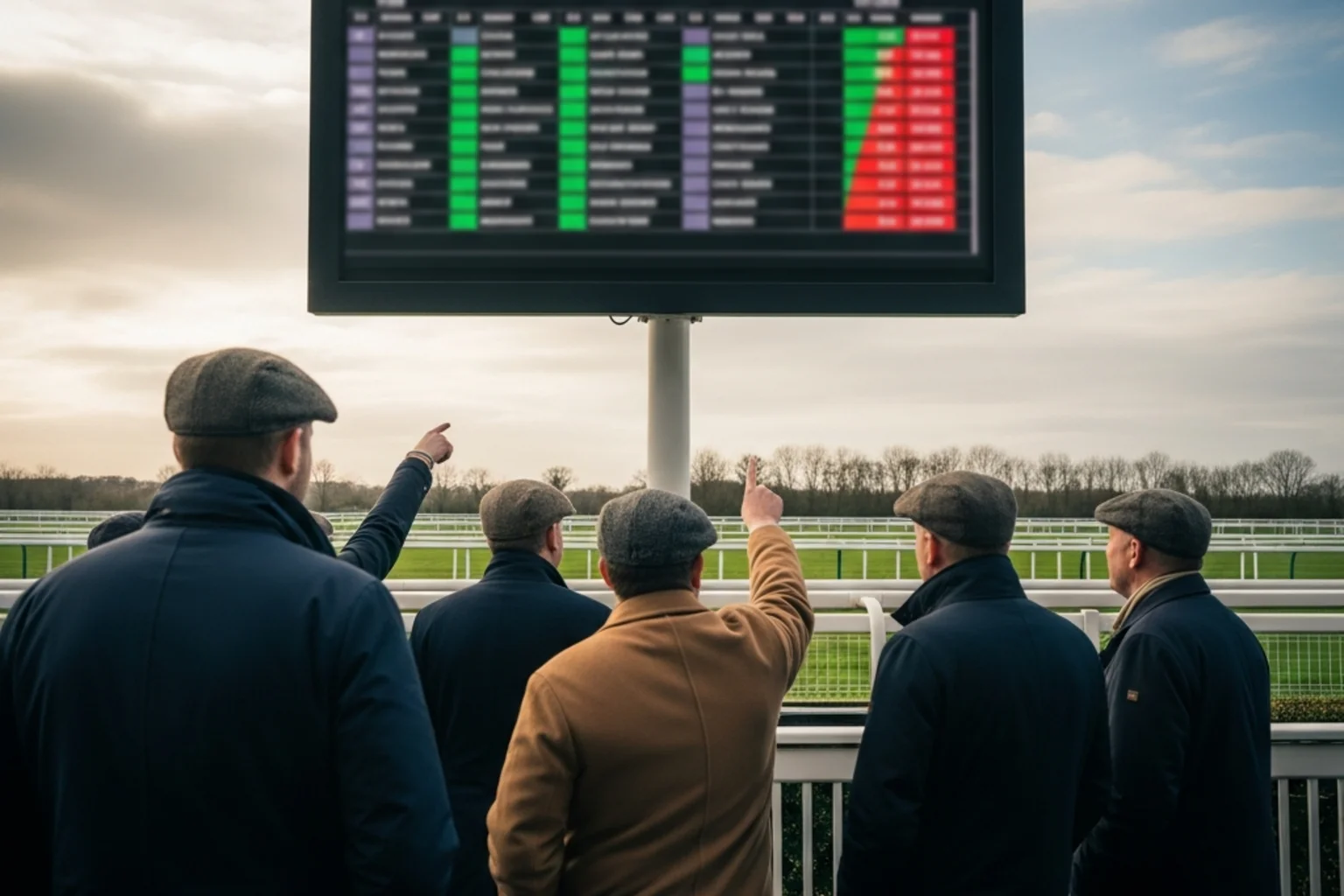
The market is talking — are you listening? On race day at Cheltenham, the odds board is not static. Prices shift — sometimes gradually, sometimes violently — in the hours and minutes before each race, and those movements carry intelligence that form books and tipster columns cannot provide. A horse that opens at 12/1 and is backed down to 7/1 by the off is a market mover, and the money driving that contraction comes from somewhere. Understanding where that money originates, and what it means, is one of the most underused tools in the Cheltenham punter’s kit.
The festival’s sheer betting volume amplifies these signals. With £450 million expected to be wagered across the 2026 edition, the market at Cheltenham is deeper and more liquid than at any other jump-racing meeting. That liquidity means price movements are driven by substantial money rather than stray bets — making the signals more meaningful and the patterns more reliable.
Early prices behave differently: ante-post tips.
What Moves the Cheltenham Market
Three distinct sources of money drive price shifts at Cheltenham, and distinguishing between them is the foundation of market-mover analysis.
Smart money comes from professional bettors and connections — owners, trainers, and their associates who place bets based on private information about a horse’s wellbeing, preparation, and chance. This money typically arrives in the morning, often through betting exchanges where large sums can be placed without immediately alerting the bookmaking market. When exchange prices tighten on a horse between 9 am and 11 am, it frequently reflects insider confidence that the horse is in excellent condition and ready to run to its best. Smart money moves the exchange first and the bookmaker prices follow.
Public money arrives later, typically from midday onward as casual punters place their bets for the afternoon. Public money tends to follow tipster recommendations, newspaper naps, and television previews. It concentrates on well-known horses and favourites, and while it moves prices, the signal is less informative because it reflects public perception rather than private knowledge. A horse shortening from 3/1 to 5/2 in the final hour because a popular tipster selected it as their nap is not the same signal as a horse shortening from 12/1 to 8/1 on exchange activity at 9 am.
News-driven movement is the third category. A significant going change, a late jockey switch, a veterinary concern reported on social media — any of these can trigger rapid price adjustments that reflect changing circumstances rather than a bet. The most impactful news at Cheltenham relates to the going: if the ground is changed from Good to Soft to Soft overnight, horses with proven soft-ground form will shorten while good-ground specialists drift. This movement is legitimate but does not carry the same insider-confidence signal as smart money.
Reading Price Shifts — Steamers and Drifters
A steamer is a horse whose price is shortening rapidly — money pouring in to back it. A drifter is the opposite: a horse whose price is lengthening as money flows away. Both carry information, but the speed, timing, and source of the movement determine its reliability.
A morning steamer on the exchanges — a horse that opens at 14/1 and trades at 9/1 by 11 am — is one of the strongest signals at Cheltenham. Exchange markets are driven by informed bettors placing significant sums, and early-morning contraction at Cheltenham, where the pools are deep, requires substantial money to move the price. If the exchange movement is later reflected in bookmaker prices, the confirmation across two markets strengthens the signal further.
A late-afternoon steamer in the bookmaker market alone is a weaker signal. It may reflect public money following a tip, or a single large bet from a casual punter with deep pockets but no inside knowledge. Late movement in bookmaker prices without corresponding exchange activity is less reliable and should be treated with caution.
Drifters are sometimes more informative than steamers. When a well-fancied horse drifts from 3/1 to 5/1 in the final hour without any obvious news event to explain the movement, the market is telling you that confidence is leaking. Perhaps connections have heard something about the horse’s morning work. Perhaps the going change has reduced the horse’s chance. Whatever the cause, steady price drift on a fancied runner is a warning signal that the market’s initial assessment was too generous.
The key distinction is between steady drift and sudden collapse. A horse drifting from 5/1 to 7/1 over two hours may simply reflect a rebalancing of the market as money arrives for other runners. A horse crashing from 5/1 to 12/1 in thirty minutes suggests something is wrong — and by the time you see the price collapse, the reason is usually already known by those who acted first.
Actionable Market Signals at Cheltenham
Not every market move is worth following. The skill is identifying which signals carry genuine predictive value and which are noise.
Follow late-morning exchange steamers on Irish-trained horses. The connection between Irish yards and informed betting money is well-documented at Cheltenham, and the broader trend supports it: Irish-trained horses have increased their share of festival handicap victories from 35% between 2015 and 2019 to 58% between 2020 and 2024. When an Irish-trained handicap runner shortens significantly on the exchanges between 9 am and noon, the signal is that connections — who understand their horse’s preparation better than any external observer — are backing it with conviction. This pattern is strongest in the big-field handicaps where Irish raiders have been so dominant.
Be cautious about following public-money steamers on favourites in championship races. When the Champion Hurdle favourite shortens from 2/1 to 6/4 in the hour before the race, that movement typically reflects recreational punters piling on the obvious choice. The price compression makes the favourite worse value, not better. If you already planned to back it, you should have taken the earlier, longer price. If you were undecided, the market movement is not new information — it is confirmation of what everyone already expected.
Ignore drifters driven by a single tipster’s negative comment. If a horse drifts because one newspaper tipster publicly opposed it, the movement reflects that tipster’s influence on public money rather than any genuine intelligence about the horse. Cross-reference any drift with exchange activity and news: if the exchange price is stable while the bookmaker price drifts, the smart money disagrees with the public money, and the smart money is usually more informed.
The most valuable market moves at Cheltenham are the ones that contradict your initial analysis. If you had marked a horse as your strongest fancy and it drifts steadily through the morning, that is a signal to reassess rather than to stubbornly hold your position. Conversely, if a horse you overlooked starts steaming on the exchanges, it is worth investigating why — the market may have identified something your form analysis missed.
The wider context is set out in our Cheltenham betting tips.
Reacting to Markets Without Losing Control
Following market moves can add value to your analysis, but it can also lead to impulsive betting — reacting to price movements without proper assessment. Never chase a steamer by placing an unplanned bet simply because the price is shortening. Stick to your pre-festival analysis and use market intelligence as a supplement, not a substitute. Support is available at BeGambleAware on 0808 8020 133.
