
 Available in US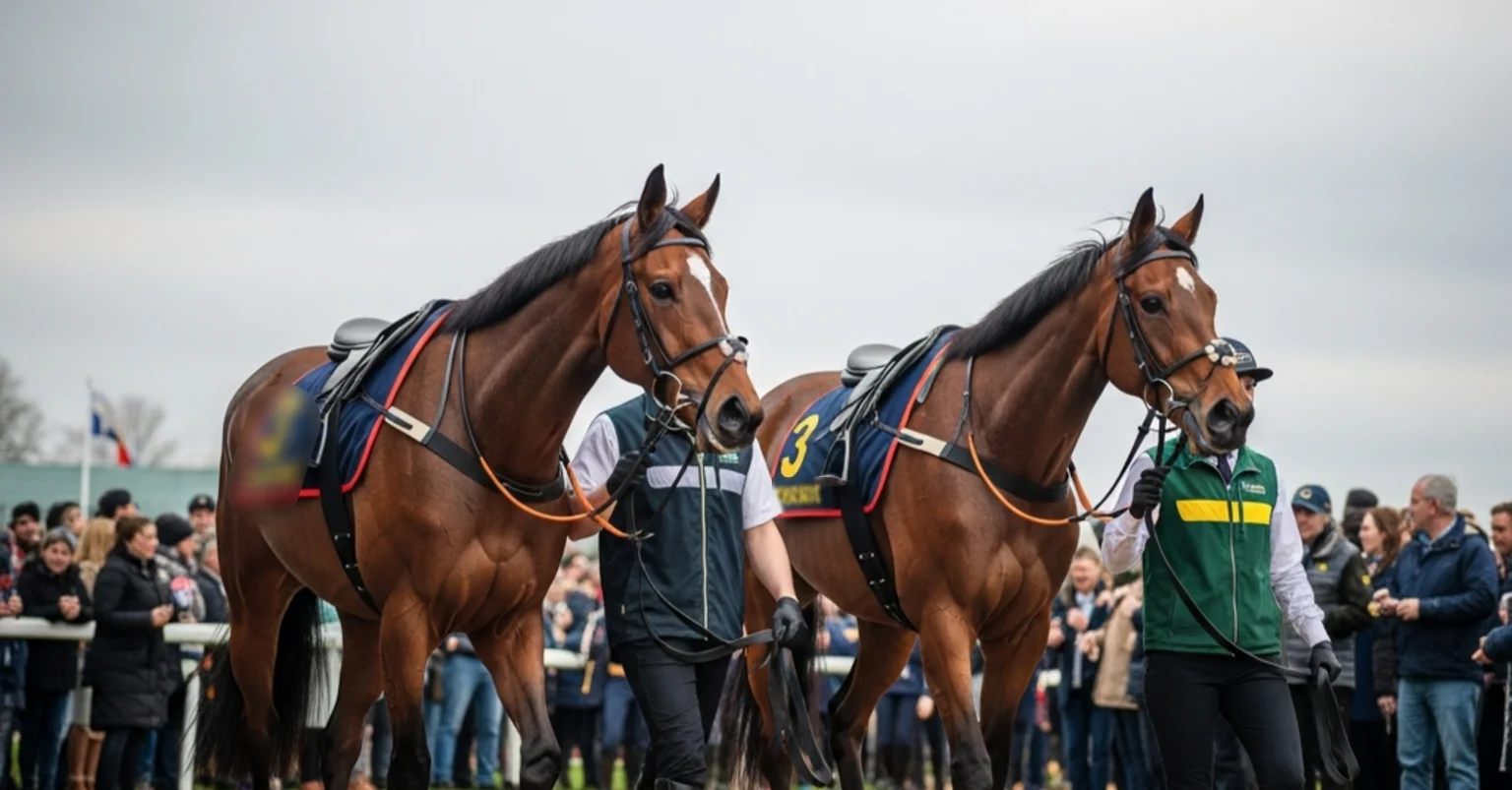
The trainer’s plan is hidden in the entries — if you know where to look. Willie Mullins has 87 entries from 54 horses across the 2026 Cheltenham Festival programme. That means multiple entries in dozens of races, with several races featuring two, three, or even more runners from the same yard. When the most successful trainer in festival history runs multiple horses in a single race, the question for punters is not whether to back a Mullins runner — it is which one.
Stablemate dynamics create some of the most interesting betting angles at Cheltenham. The market’s default assumption is that the trainer’s first-choice horse will run best, but that assumption is wrong often enough to produce genuine value on the second or third string. Understanding why trainers run multiples and how to identify their primary hope is a skill that separates informed punters from those who simply follow the shortest-priced option.
The yards that run two are listed in the trainer statistics.
Why Trainers Run Multiple Horses
There are several legitimate reasons why a trainer enters more than one horse in the same race, and not all of them point toward the same conclusion about which runner is the stable’s best hope.
The most common reason is genuine uncertainty. A trainer may have two horses of similar ability who are suited to the same race, and the final decision about which one to prioritise depends on factors that only become clear closer to race day — the going, the horse’s morning work, veterinary assessments, or the tactical shape of the race once the full field is known. In these cases, the trainer genuinely does not know which horse will run best until the last possible moment.
Pacemaking is a second reason. In championship races where a trainer has a strong favourite, a second entry can be used as a pacemaker — a horse whose job is to set a tempo that suits the yard’s main contender. The pacemaker is not expected to win; it exists to control the race for the benefit of a stablemate. Identifying a pacemaker before the race is valuable information, because the market sometimes prices the pacemaker as though it has a genuine winning chance.
Hedging is a third reason. Major owners with multiple horses in training want the best chance of having a winner, and trainers accommodate this by running several from the same yard. Each horse may represent a different owner, and the trainer’s job is to give every owner the best possible chance — not to pick one runner over another. In these situations, the jockey bookings become the single most revealing indicator of intent.
Finally, some entries are tactical — horses entered in multiple races across the festival who will ultimately only run once. A horse might be entered in both the Ryanair Chase and the Gold Cup, with the final decision depending on the ground, the opposition, or the horse’s latest piece of work. These multi-race entries are common at the five-day declaration stage and do not necessarily indicate that the horse will run in the race you are considering.
Identifying the First String
The jockey booking is the single most reliable indicator of which horse the trainer considers the first string. Paul Townend has ridden 38 Cheltenham Festival winners, and 36 of those 38 wins with the Mullins operation came on the trainer’s preferred runner. When Townend is booked to ride one of two Mullins entries, the market — and history — strongly suggest that is the yard’s primary contender.
The logic extends beyond Mullins. Nicky Henderson’s pairing with Nico de Boinville, Dan Skelton’s use of Harry Skelton, and Gordon Elliott’s jockey allocation all follow similar patterns: the number-one jockey rides the number-one horse. When a leading jockey is moved off one horse and onto another from the same yard in the final days before the festival, that switch carries more information than any form guide.
Odds provide a second signal. Bookmakers are in constant communication with connections and quickly adjust their prices to reflect stable intelligence. If two Mullins entries are priced at 3/1 and 12/1, the market is telling you which horse the yard and the betting public consider the first string. That pricing is not always correct — bookmakers respond to money, not necessarily to inside knowledge — but it is a useful starting point that aligns with jockey bookings more often than not.
Trainer comments in pre-festival interviews should be read carefully but sceptically. Trainers are skilled at saying positive things about every horse without revealing their true hand. The most informative comments are the specific ones — references to a particular horse’s morning work, or a mention of how a specific horse suits the expected going — rather than generic enthusiasm about the team’s chances.
Finding Value in the Second String
The market’s tendency to focus money on the first string creates systematic overpricing of the second horse. When Townend rides one Mullins entry and a less prominent jockey rides another, the market funnels its money toward the Townend ride and allows the other horse to drift to bigger odds. That price drift can create genuine value if the second horse has specific qualities that suit the race conditions better than the market recognises.
The most common scenario for a second-string value play is when the going shifts in a direction that suits the less-fancied horse. A first-string runner priced up on the assumption of Good to Soft ground may be vulnerable if the ground turns Soft or Heavy overnight. If the second string has proven form on testing ground while the first string has only won on better surfaces, the conditions have shifted the probabilities — but the market may not have fully adjusted.
A second scenario arises when the first string has been heavily campaigned through the season while the second horse arrives fresher. A horse who ran at the Dublin Racing Festival, then at Leopardstown again, and arrives at Cheltenham for a third race in six weeks may be physically past its peak by festival week. The lightly raced stablemate, brought along carefully with Cheltenham as the sole target, may be at a fitness advantage that the form figures do not reflect.
The discipline is in the evidence, not the speculation. Backing the second string solely because it is a bigger price is not strategy — it is hope. The value exists only when a specific and identifiable factor (going, freshness, race conditions) favours the less-fancied horse. Without that evidence, the market’s preference for the first string is usually correct, and the second horse’s bigger price simply reflects its lower chance.
The wider context is set out in our Cheltenham betting tips.
Backing the Second String With Discipline
Stablemate analysis can identify value, but it does not eliminate risk. Backing the second string is by definition backing the less likely winner — the payoff when it works is higher precisely because it fails more often. Keep your stakes consistent with your normal approach and do not increase them because you believe you have found a hidden edge. Support is available at BeGambleAware on 0808 8020 133.
